Springfield, Ohio, 2006.
I wrote this article for Country Living magazine.
In the 1930s, while the country was in the throes of the Great Depression, the U.S. Government launched the Works Progress Administration, an agency designed to help the unemployed.
Artists and laborers often were assigned to public beautification projects, such as painting murals on city buildings or developing a flower garden in a public park.
H.G. “Ben” Hartman, an iron molder from Springfield was one of many of the out-of-work who took advantage of the WPA program, creating a concrete fish pond in his own yard. Hartman believed the project would be right up his alley; it would allow him to combine his background in skilled labor and his love of gardening to not only beautify his home—a corner property with a nice-sized yard—but also his neighborhood.
The fish pond turned out so well that Hartman decided to add a little more for decoration. He salvaged large rocks from construction sites, hammered them down and added them to the walls and rim of the little pond, using concrete as adhesive. Broken mirrors and pottery shards soon found a new role as decor in Hartman’s growing project.
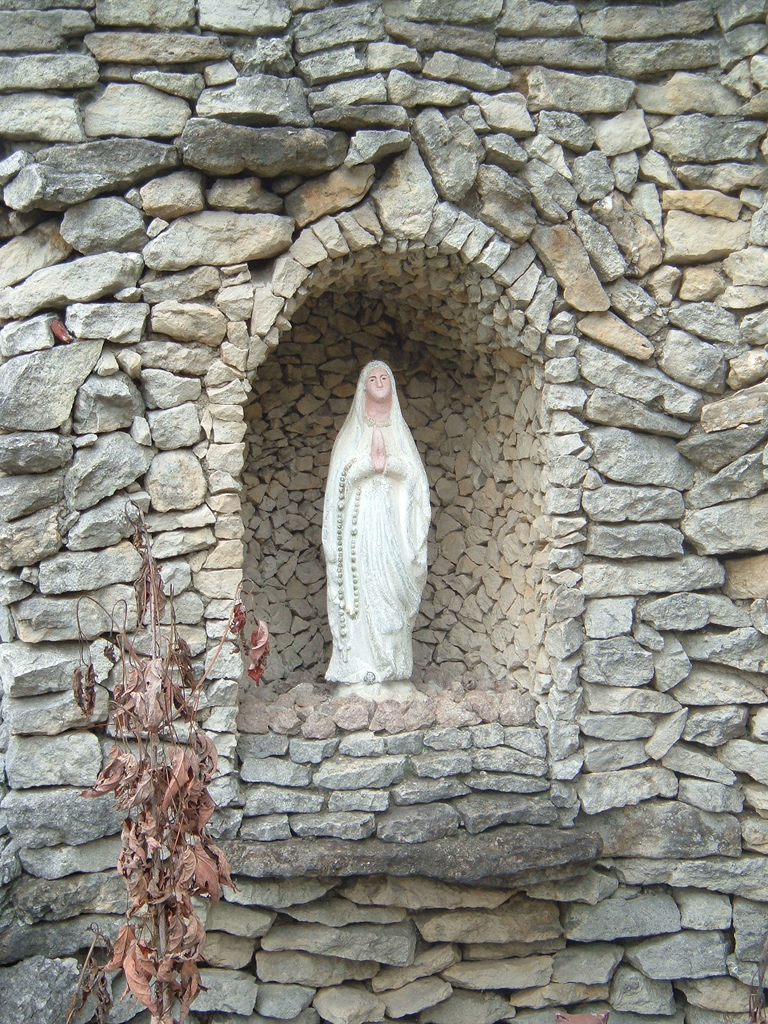
Once inspiration struck, Hartman was hooked. He began building more and more with the rocks he found, starting with small stone houses, icons of Americana and religious imagery, before tackling a large-scale, walk-in “cathedral” and a stone castle, compete with a drawbridge and moat.
For seven years, Hartman worked tirelessly, creating miniature replicas of the White House, Noah’s Ark (complete with animal figurines marching two by two), Independence Hall, Mount Vernon and a dozen other tiny buildings. There are stone tributes to Custer’s Last Stand, Daniel in the Lion’s Den and the Oregon Trail.
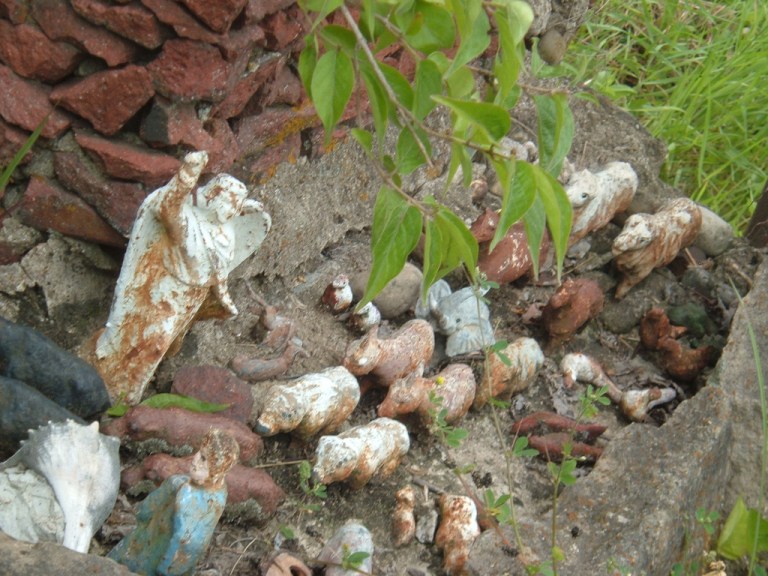
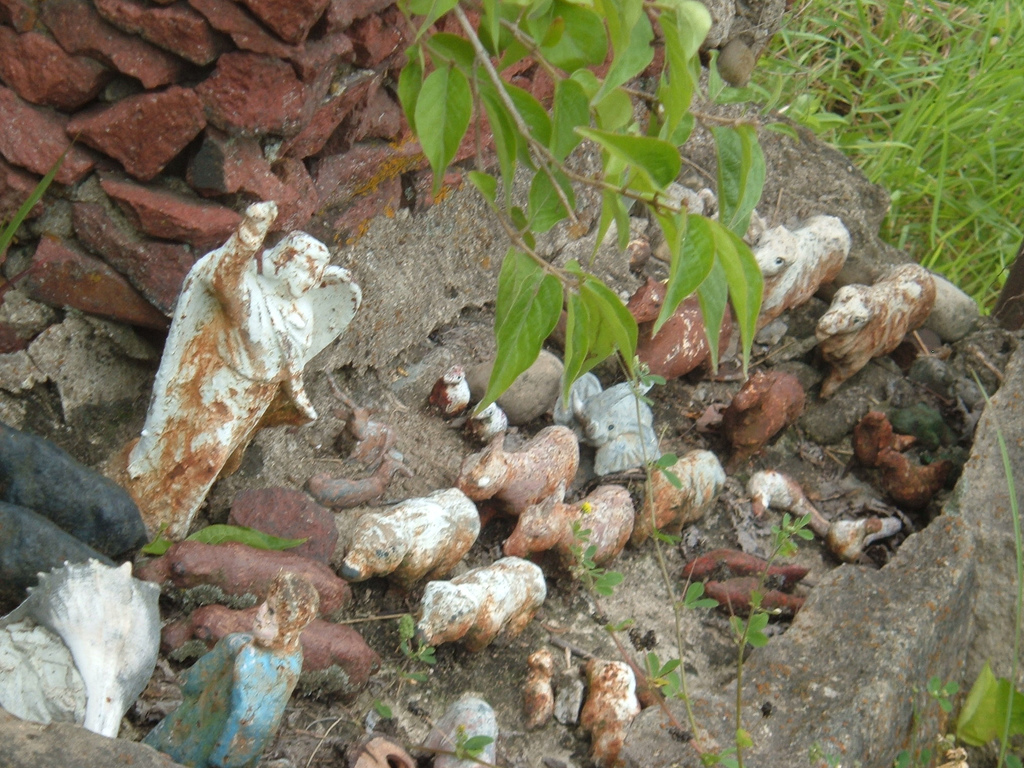
Throughout the mini monuments, Hartman placed figurines depicting the Last Supper, the Nativity and a wartime battlefield which grimly depicts “the sad part of war” with little army men, fallen or missing limbs, accompanied by angels. Nearby, a healthier army prepares to storm a castle. Salutes to period pop culture also were added, including odes to champion boxer Joe Louis, Rin Tin Tin, Little Orphan Annie and the Dionne quintuplets, five Canadian sister who became media sensations upon birth in 1934. Even concrete pathways featured inlaid designs and arrows directing visitors through the miniature community.
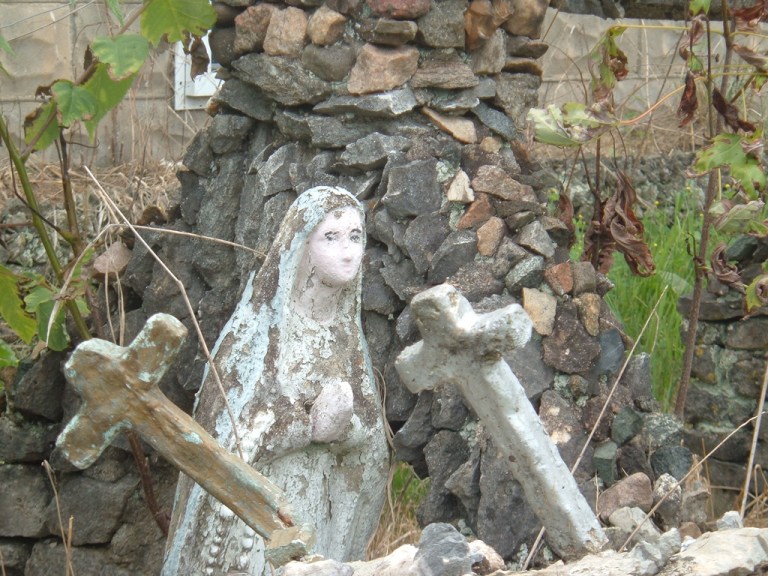
Hartman didn’t forget to include humorous touches throughout the garden. Religious statuary stood next to stone garden gnomes, and a hand-lettered sign urged visitors to “Behold thy mother, and don’t forget your dad.” Overall, more than 250,000 stones, bedecked with flower beds and plant arrangements, contributed to Ben Hartman’s rock garden creation. After Hartman’s passing in 1944, his wife, Mary, continued to plant flowers in the garden and his children aided in keeping the lawn trimmed and weeded.
 In 1968, the Hartmans were awarded with a community beautification honor, and a small sign proclaiming the designation still stands in the garden. Word of mouth and some national publicity, such as an entry in the book Roadside America, made the rock garden a popular roadside curiosity that drew travelers off the main road to a quiet neighborhood off the beaten path.
 During the last few decades, upkeep has proven an exhausting chore for the Hartman family, and many of Ben’s original creations have crumbled and deteriorated from time and weather damage. Weeds have overrun the property and eroded the stone artwork. The fish pond that started it all now stands empty. But the garden still holds a special place in the hearts of the Hartmans and the local community. Hartman’s son still lives at the old family home and hopes to eventually sell the property, but with a condition: That the buyer is willing to upkeep, and possibly even restore, the rock garden that Ben Hartman created nearly 70 years ago.
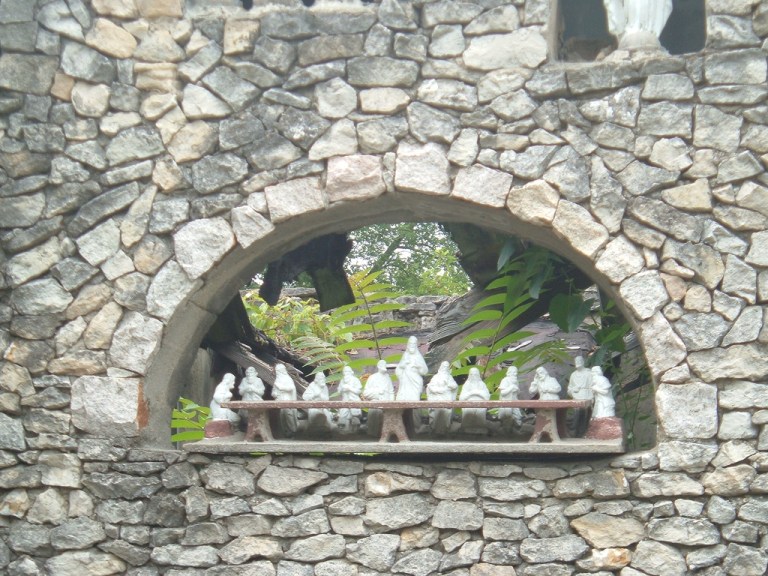
“The motivations behind Ben Hartman’s building these monuments are more important than art itself,” the Clark County Chamber of Commerce tells visitors. “Built by a man who was not connected with the world of fine art, there is a compelling charm, vitality, passion and spirit in his works.”
1905 Russell Ave. (on the corner of Russell Avenue and McCain Street), Springfield. Admission is free and there is no need to call ahead; visitation is allowed during daylight hours.
 C-bus Rock City