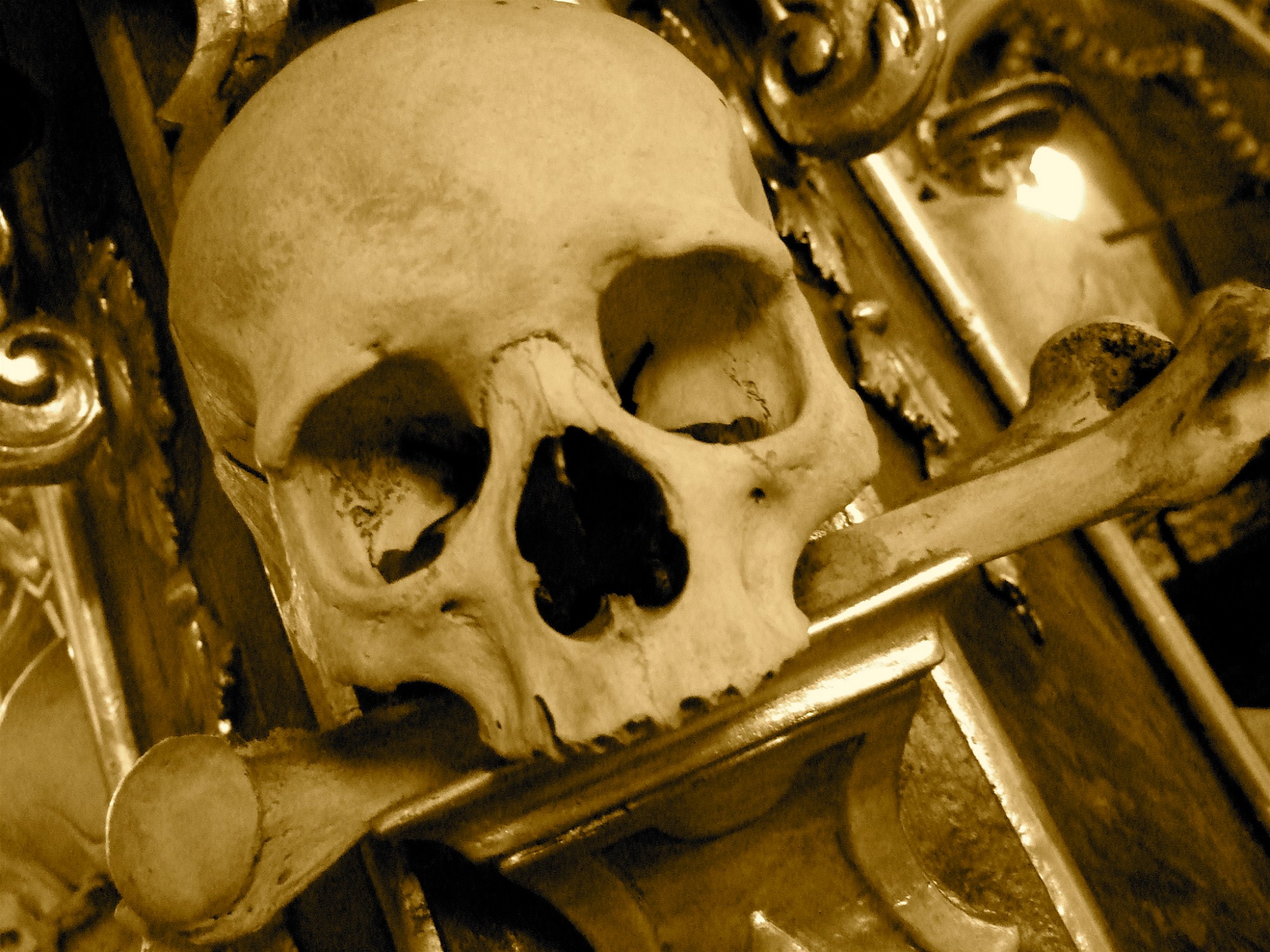
Kutná Hora, Czech Republic, 2008
The first thing you notice when you walk into Sedlec Ossuary is the cold.
Outside, it’s a normal little Catholic chapel, surrounded by a classic Eastern European cemetery, well-kept and unassuming.
But there are a few little indications that this place is a bit different from anything you’ve ever seen. Namely, the skull-and-cross-bones motifs embedded into the pavement outside the chapel entrance and solemnly perched on the wall surrounding the property.
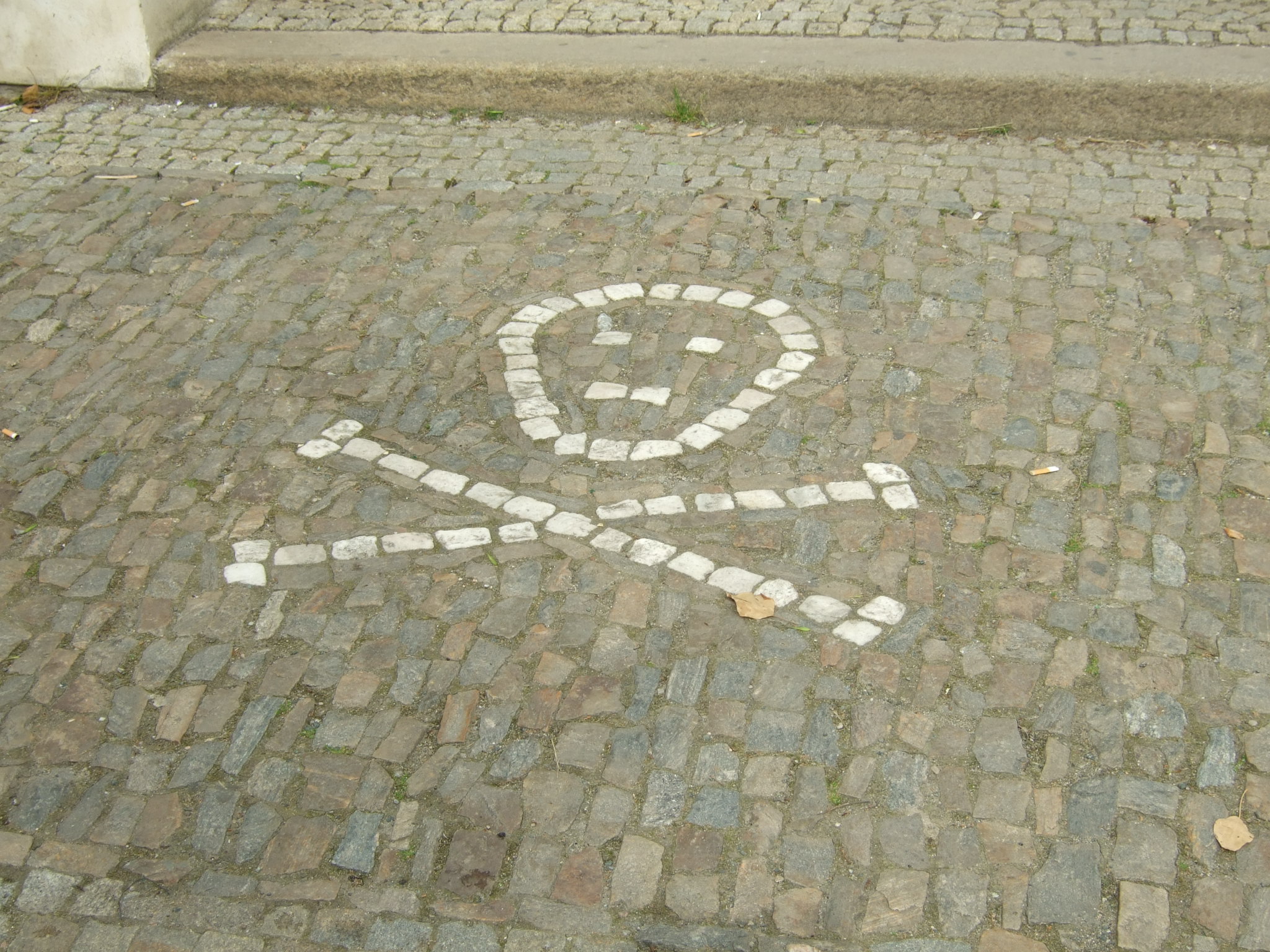
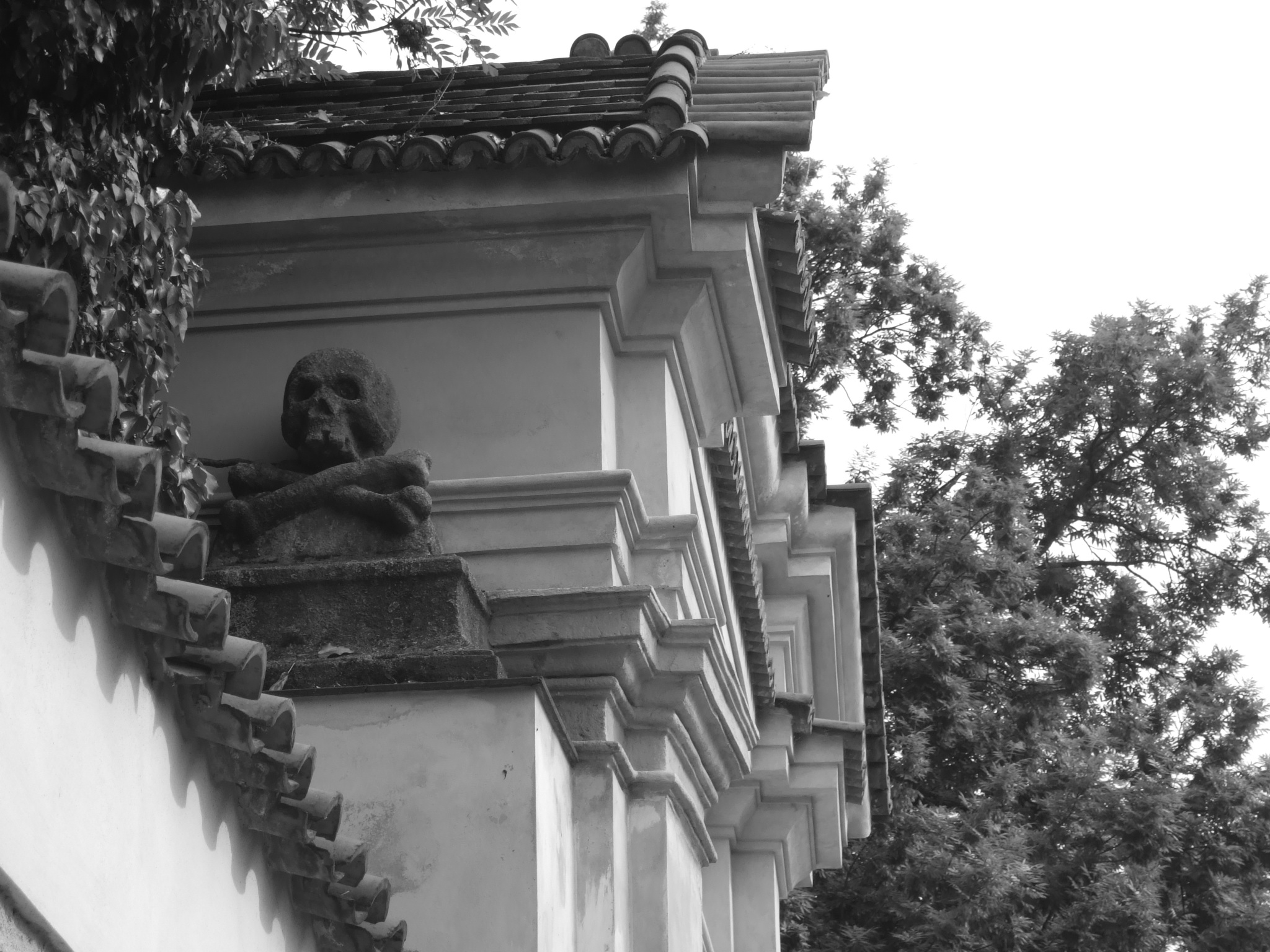 Even if you’re not slightly chilled by the ominous welcome, once you step inside the church and down a small flight of stairs, the temperature drops palpably and surprisingly.
The second thing you notice is the smell. It’s sort of old-fashioned. Not stinky, but familiar. Like a great-aunt’s basement, full of trunks and chiffarobes and moth-balled furs.
Even if you know what the Ossuary is all about, it still takes a minute or two to register the third thing: everything around you is made of human bones.
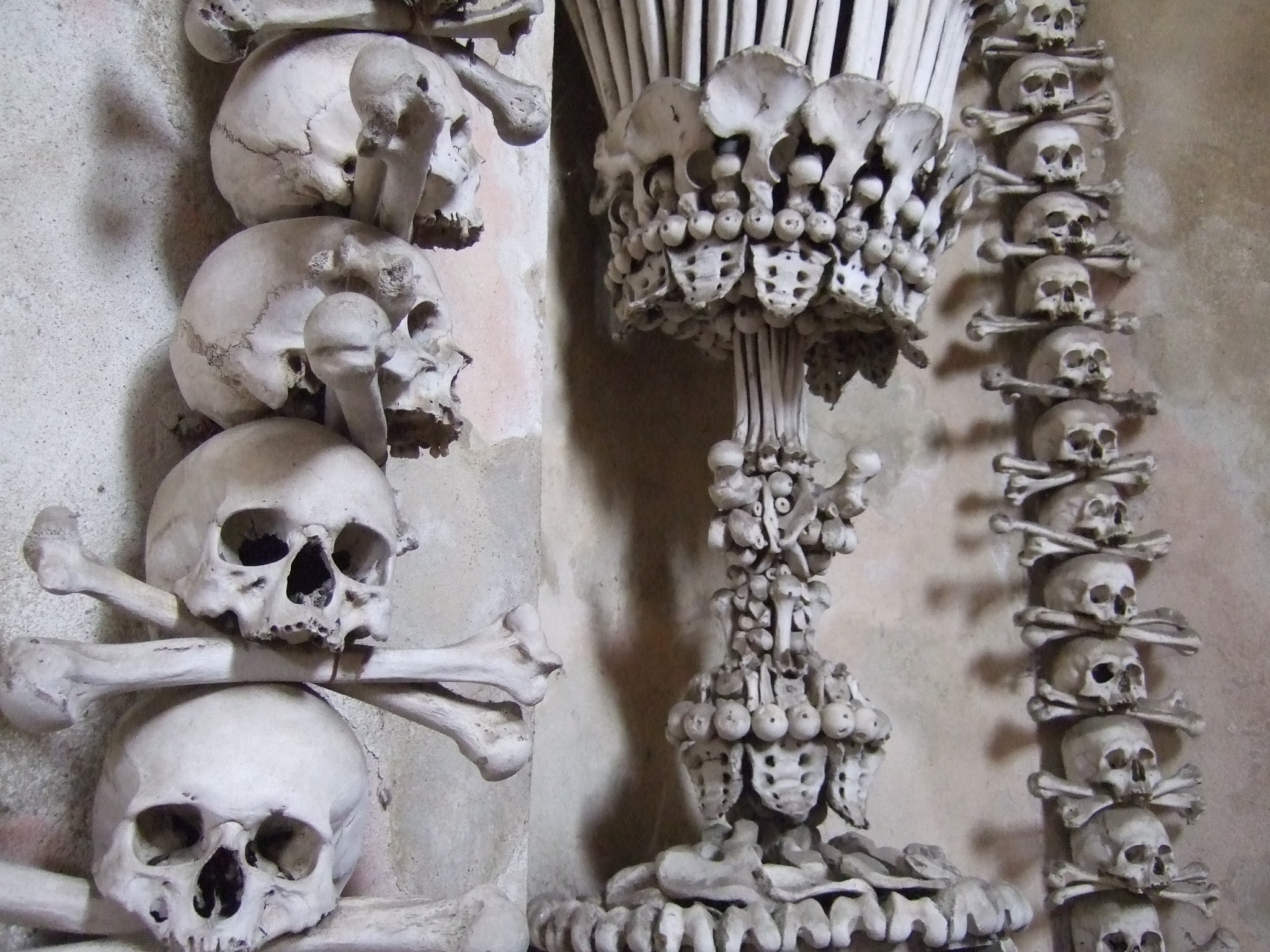 That’s right. That’s not some take on Dali’s Morphing Body bit—a riff on fancy home decor built on the backs of humans. Those are the actual backs (and leg bones and ribs and pelvi) of humans.
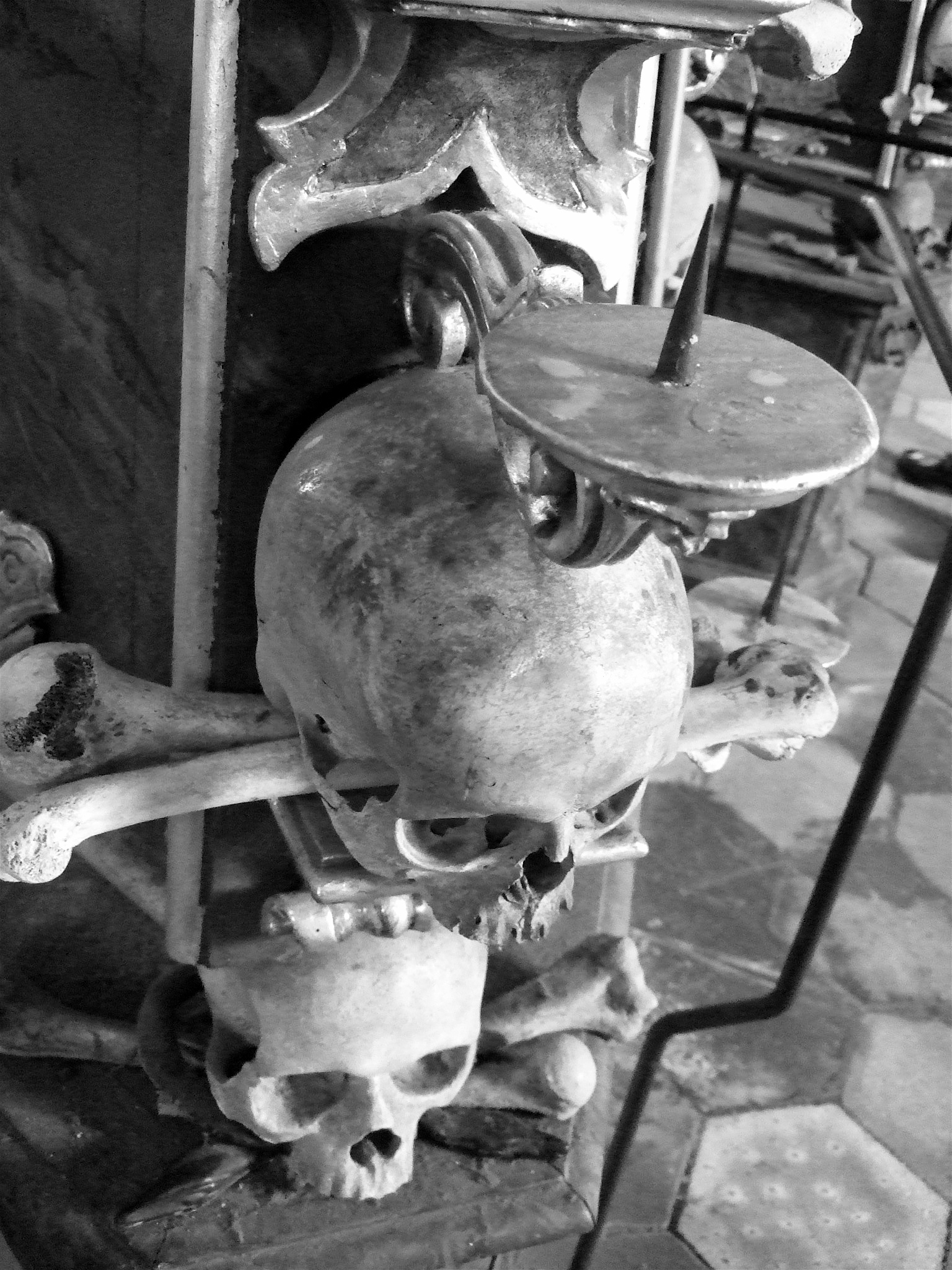 That’s not a goth candle-holder you bought to be cool and subversive in college. That’s a real-live, bonafide human skull with a spike on top of it.
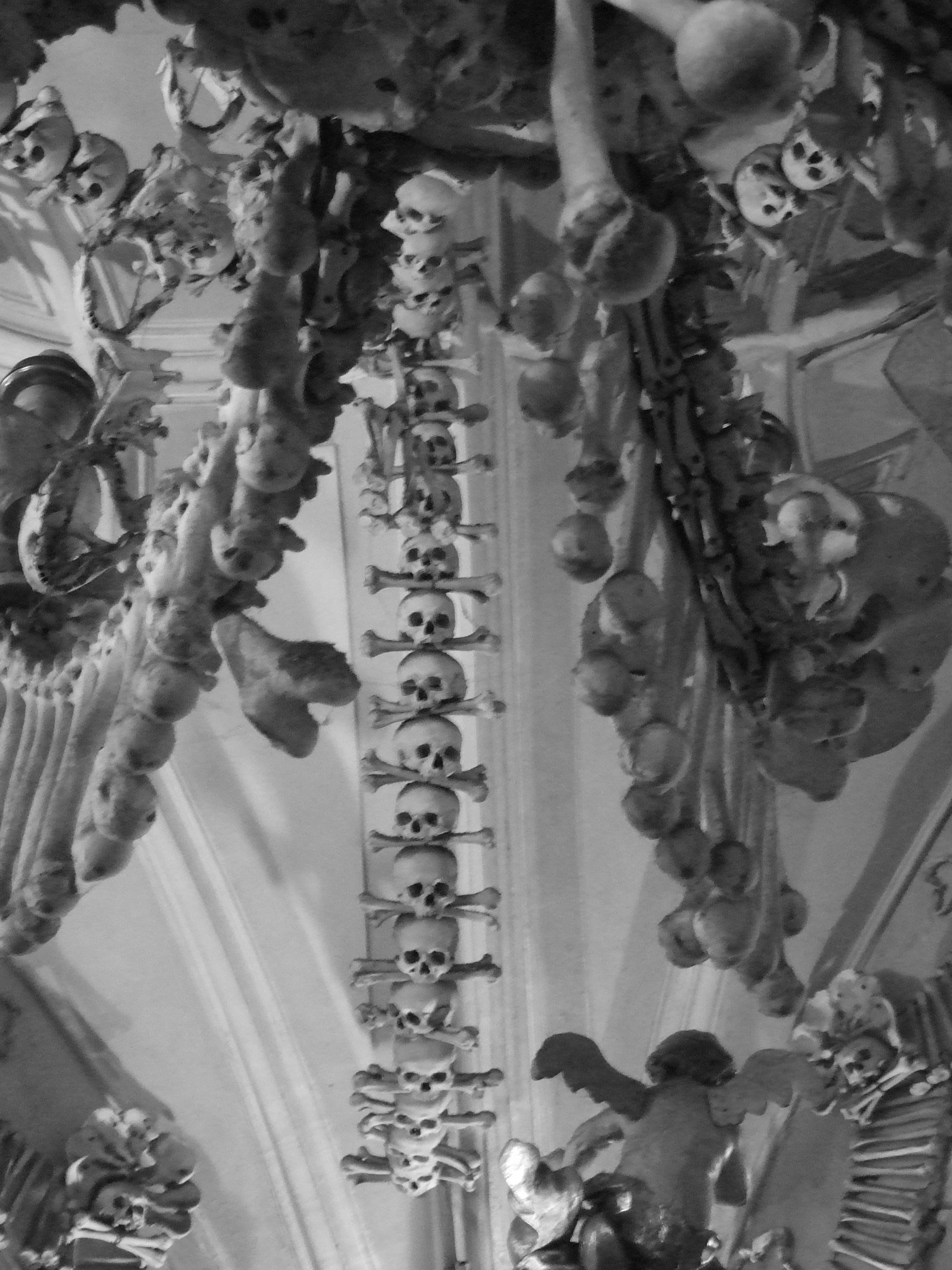 Yes, that’s a cute little cherub statue surrounded by skulls and bones…from ACTUAL PEOPLE WHO WERE ONCE ALIVE.
It sounds almost too crazy to believe, like something found in a basement dungeon of a Buffalo Bill-style serial killer. But it’s real. And when it was right in front of me, the effect was surprising. It felt less like a chilling and creepy house of the macabre, and more like…a tribute.
The story of the chapel dates back to the 1200s when, thanks to some publicity from the king, became the place to be buried. But when the Black Plague struck Europe a century later, the grounds were overrun with bones. Even after expansion, church officials could not keep up with the burials—literally tens of thousands of them. And when the Ossuary was built, mass graves were unearthed. That’s when the monks came up with an idea: rather than continually exhuming and reburying the cemetery’s “residents,” simply pack them up and move them inside the church.
In the 1800s, an enterprising Czech carpenter took on the role of the interior decorator at Sedlec and arranged the remains into the incredible sculptures and motifs you see today. It’s believed that the church contains the skeletons of as many as 70,000 people.
Despite the alarming “medium,” the results are truly works of art, fantastically detailed and displayed in an oddly loving way.
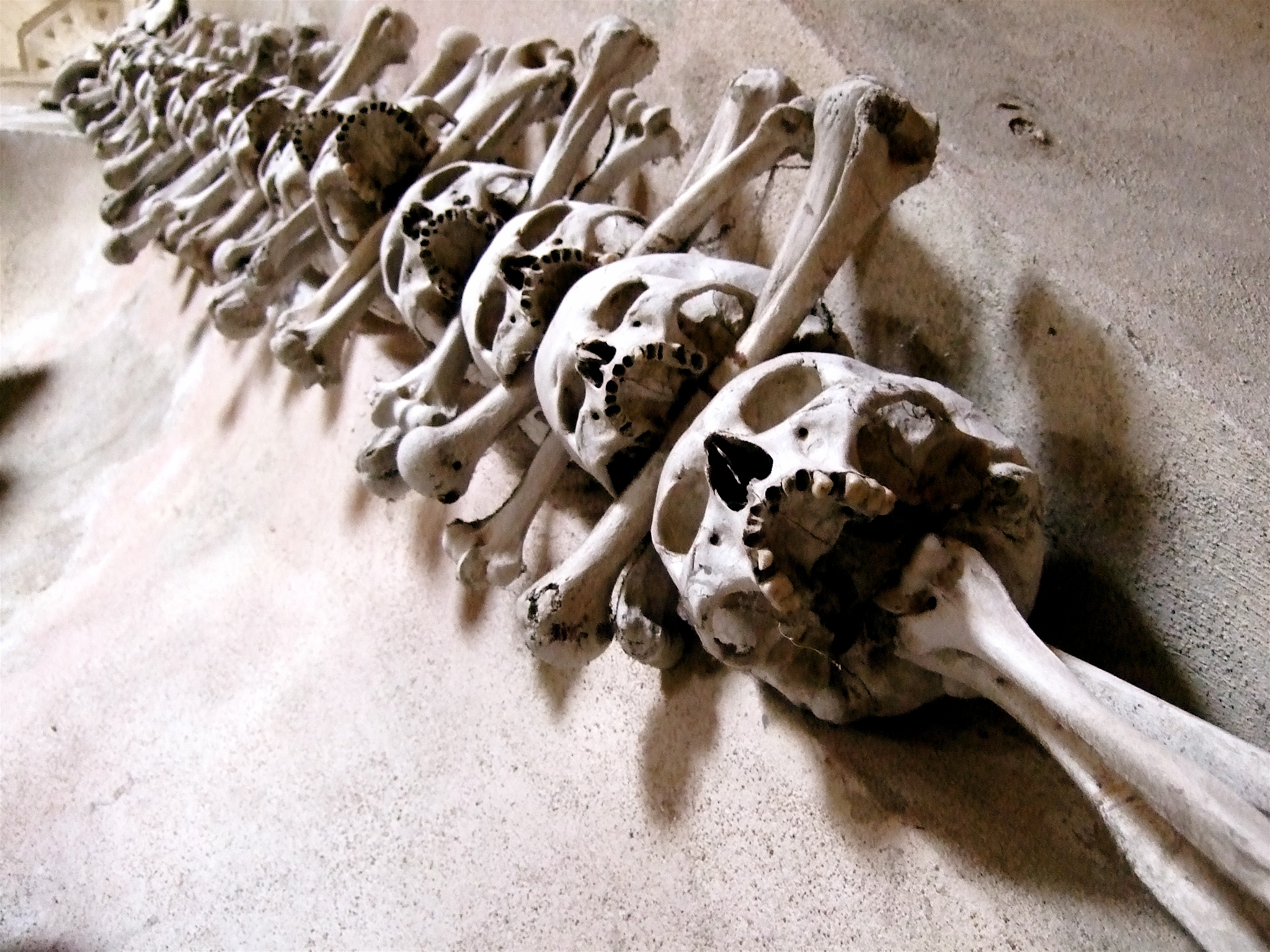 The centerpiece—and most famous—work in the chapel is the chandelier. Hung in the style of a May pole, covered in streamers, the piece is made up of at least one of every bone in the human body.
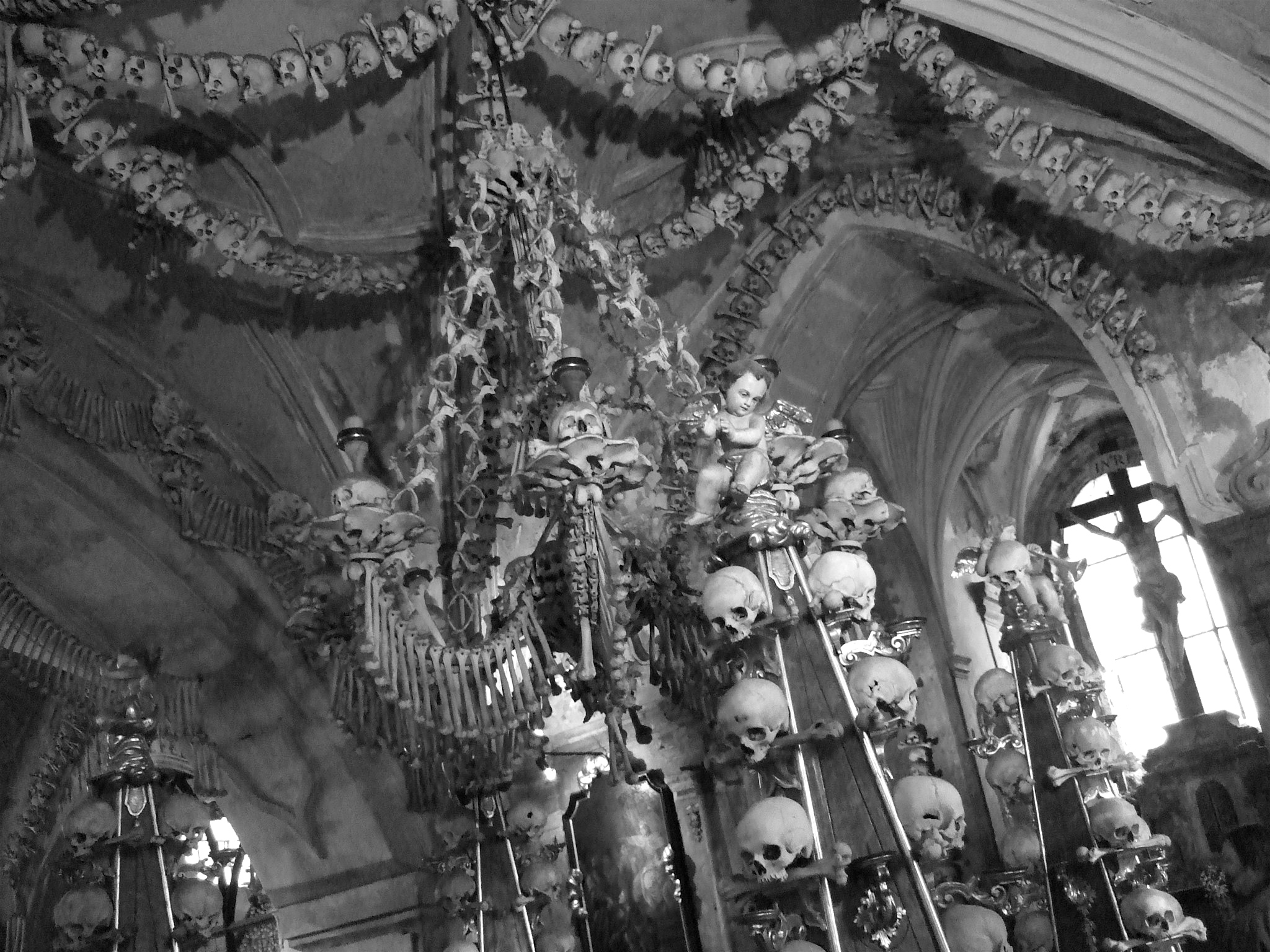 When I saw it, I was incredulous. All you can do is stare. It’s a difficult thing to process—something so bizarre and unique and strangely beautiful…made of human bones. HUMAN BONES.
Every place is unique, of course, and “bone chapels” are not usual in Europe. But Sedlec Ossuary is special.
There’s something very tongue-in-cheek about the art around Bohemia, a wink that lends to the mystery of region. Some will find it weird and creepy. A headless monument in honor of Kafka. A Lenin statue hanging from a flagpole. A bronze of a ghost from the Don Giovanni opera. A “two dudes peeing” fountain. To me, it seems more of a necessary sense of gallows humor and inside camaraderie for a country that has experienced more than its share of heartache. Like a secret smile between neighbors. Laughter through tears. And even a sort of ode to survival.
Sedlec Ossuary is a popular tourist attraction, but if you visit you may be surprised that you find it’s something more.
You might not get it…but I guarantee you’ll never forget it.
 C-bus Rock City


