
Paris, France, 2015.
Here’s a little fun fact for you: the word “gargoyle” comes from the French word gargouille, which means throat. It kind of sounds like gargle, right? So that’s fitting.
Their purpose is twofold: to keep evil at bay—and act as super-fancy downspouts. Not many things that can do both.
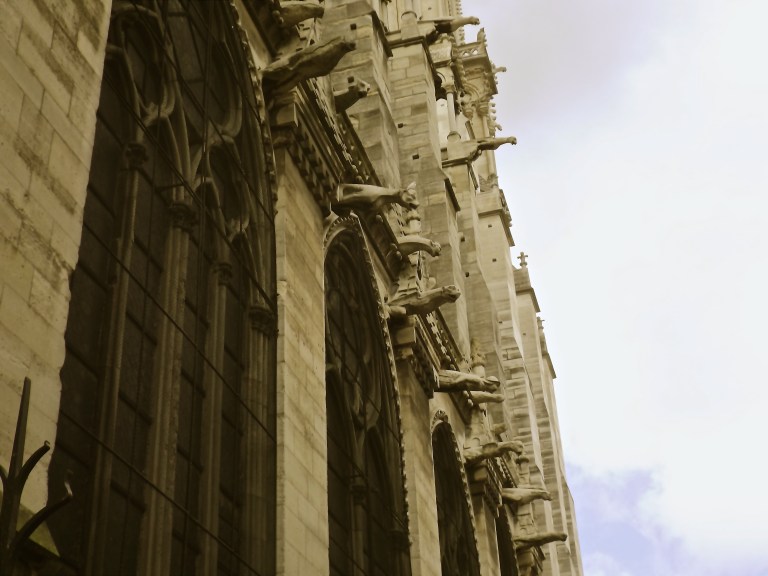
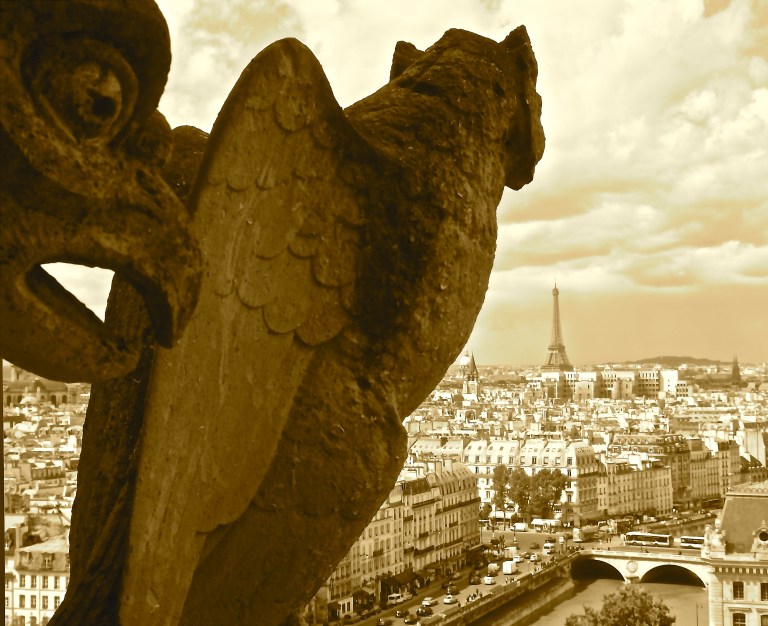
Also fitting is that some of the most famous gargoyles in the world actually live in France—at the Notre–Dame in Paris. The cathedral itself was built between 1163-1345, but the many intricate and sometimes creepy stone monsters were added much later.
(Side note: I always find it kind of funny that in the U.S. we consider anything from the 1700s really old. And it is! But 12th century—I mean, come on.)
There were several dark periods of history for the cathedral, including the years of the French Revolution, when many of its treasures and artworks were destroyed or stolen. In 1845, two popular architects took on the task of restoring and renovating the building, and that’s when a new spire and many of the gargoyles we know and love today were added.
The restoration project was a major controversy at the time. Critics were afraid that the historic church would be revamped into something completely new and unrecognizable. Groups campaigned to keep Notre–Dame as is with no additions. Here’s one great quote from a dissenter who belonged to a group called The Committee of Arts and Monuments:
The original character of a monument… must be preserved and not destroyed by an ambitious restoration. An old man loses his dignity when his gray hairs are dyed, his wrinkles masked and he is dressed in modern clothes. He becomes then a young old man—a ridiculous caricature.
Hey, it’s a reasonable argument. But others were looking to spiff the place up a bit.
The original renderings of the architects’ vision was much less elaborate than the final product. They were working on a major budget—the equivalent of about $340,000 for the entire project. The plan was to make the major repairs and be done with the whole thing.
But later revisions to the design added more and more stone beasts. The gothy look was in, the architects argued, and the monsters added more life to the structure.
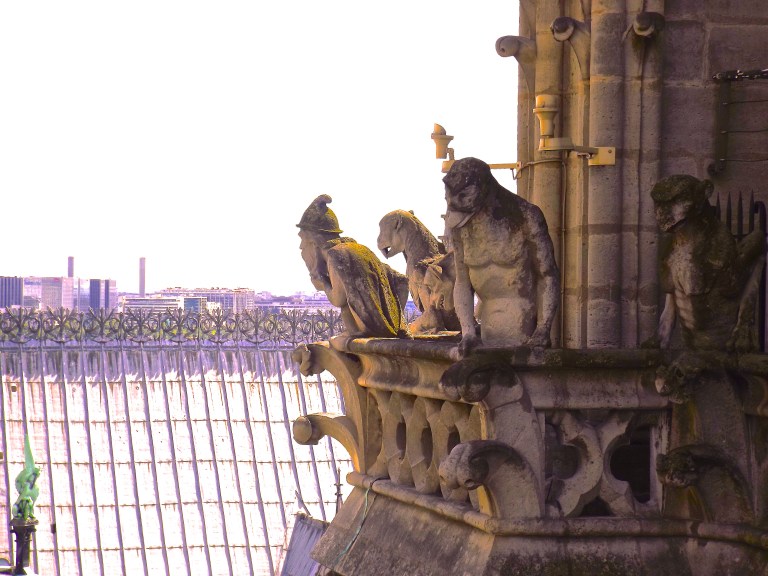
That’s not to say they were throwing gargoyles around willy-nilly. Each figure was specially planned to fit the different time periods of the cathedral’s construction. While some squares argued that the creatures were silly and impractical (with the functional drainpipe mouths spitting up water on passersby down below—which was probably pretty hilarious), the artists eventually won the majority over and the gargoyles were given the go-ahead by Paris city officials.
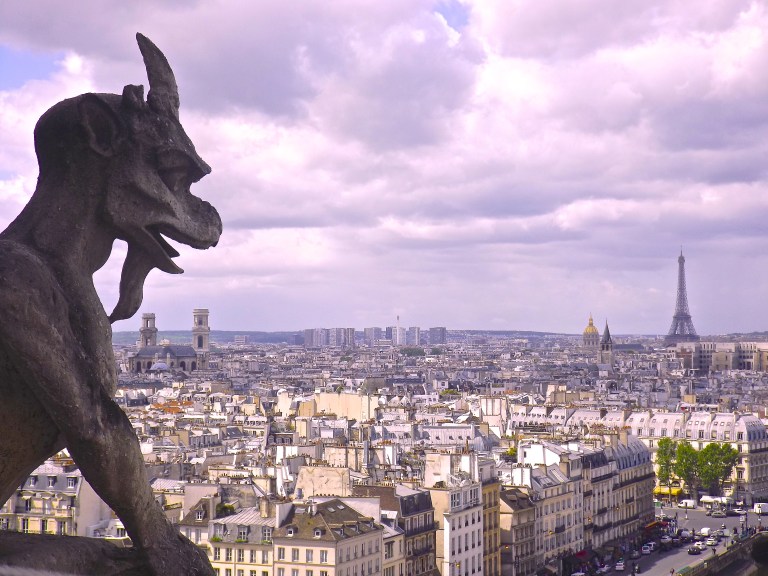
Plaster casts were made from some of the cathedral’s deteriorating original gargoyles and served as models for the new generation. The architects reveled in the “functional absurdity” of the creatures and went to town creating lurching, leering grotesques that glowered out at the city from every corner with a gleeful creepiness.
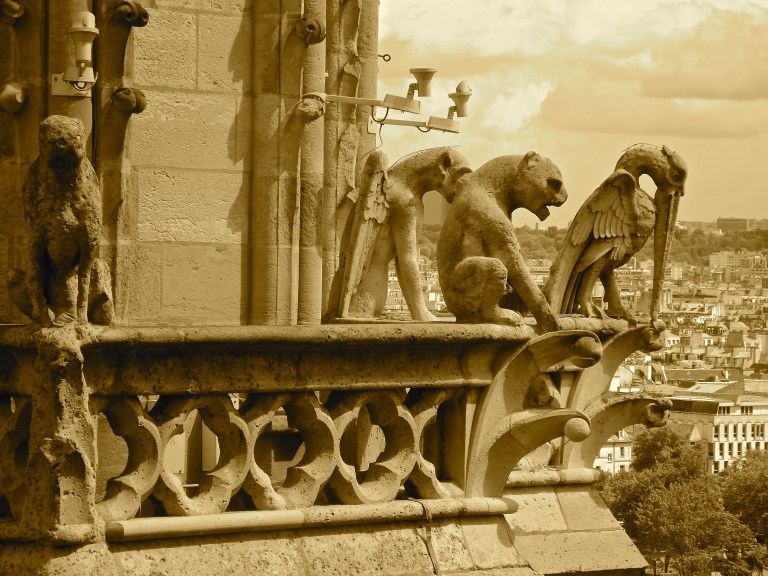
Some of the figures are mythological and include chimeras, gryphons and dragons. Others depict a mish-mash of different animal and human characteristics. There are tons of demons, of course. And there are even some statues depicting real people and monks from the cathedral. The drainpipe thing pretty much went out the window and most of the new creations were made purely for decoration.

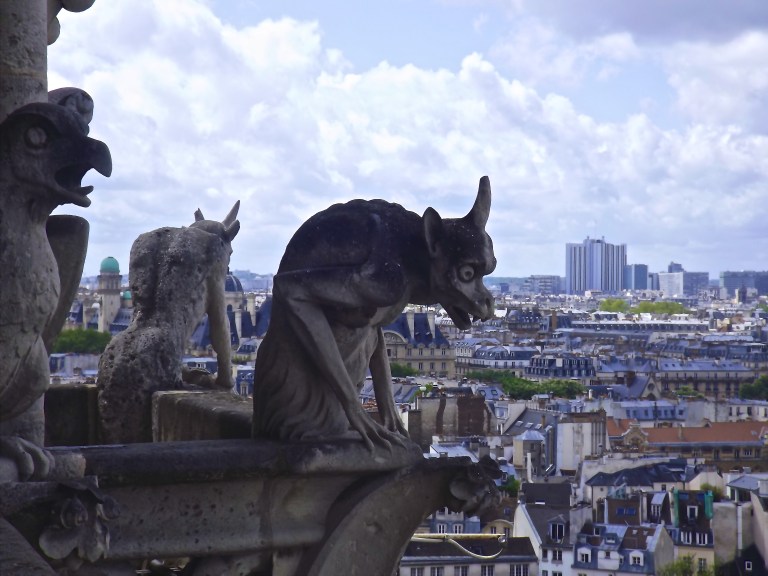
Perhaps the most famous of Notre–Dame’s gargoyles is le Stryge: the vampire. The little winged-and-horned, monkey-like beast stares down at the City of Light from the cathedral’s south tower with his chin in his hands and his tongue sticking out. The comical stone imp became the unofficial mascot of the new Notre–Dame:
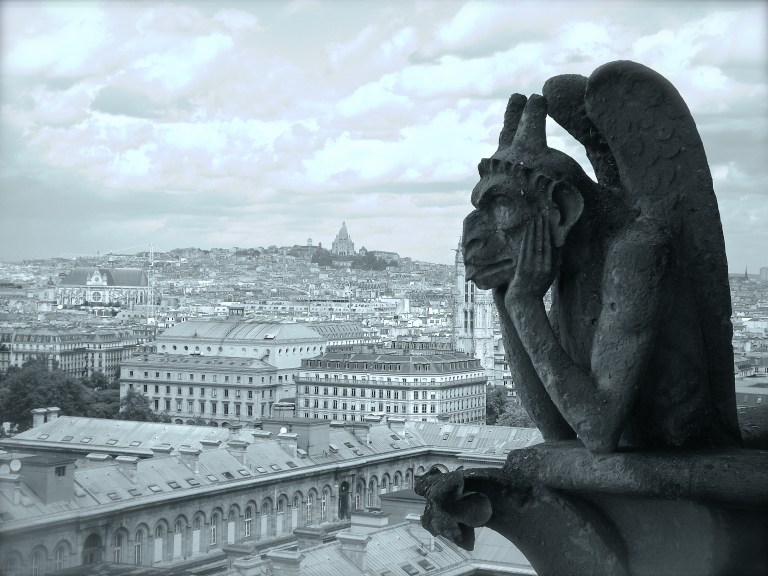
Today, the cathedral is the most popular tourist attraction in Paris (yes, even more popular than the Eiffel Tower and the Louvre). Nearly 14 million visitors drop by every year, wait in line to climb the winding staircases to the top and pay an up-close-and-personal visit to the gang of gargs.
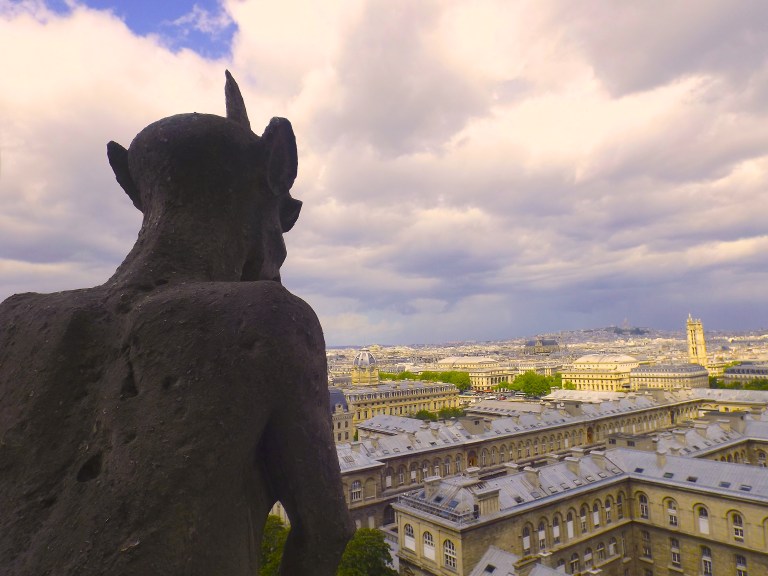
Not only are they pretty cool themselves, they’ve also got the best seats in town.
Main source: The Gargoyles of Notre–Dame: Medievalism and the Monsters of Modernity by Michael Camille. If I got anything wrong, please leave a comment.
 C-bus Rock City