August 2004.
I wrote this article for Country Living magazine. It won an Award of Merit for Best Feature Writing from the Council of Rural Electric Communicators.
February 9, 1964, is one of those dates in history when many people remember where they were.
For many this is arguably is the most important date in music history.
That night, a record-setting 73 million Americans tuned in to “The Ed Sullivan Show” to see four mop-topped young Brits who were taking the world by storm with their innovative rock sound.
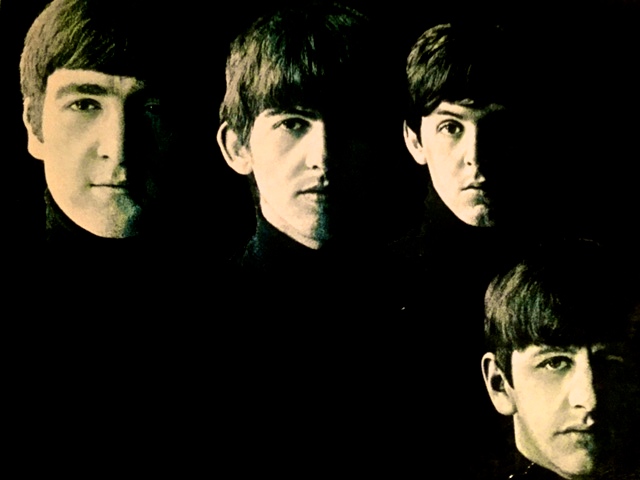
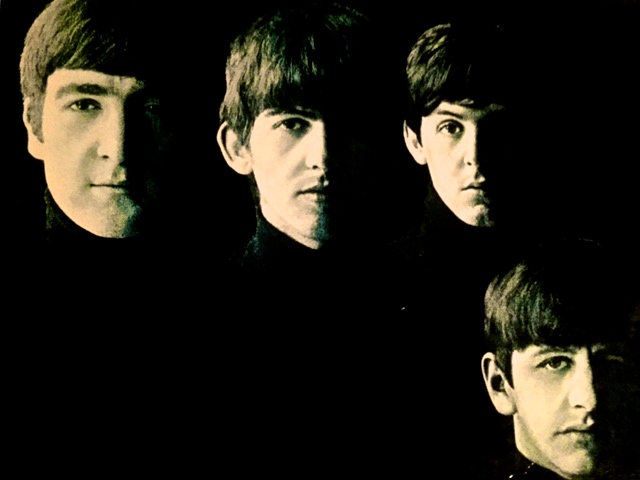
The Beatles had already conquered the Billboard charts at home and abroad with their now-legendary album “Meet the Beatles,” which featured catchy songs like “I Want to Hold Your Hand,” “I Saw Her Standing There” and “All My Loving.” Now the quartet was debuting their live show on American soil—and audiences went wild.
In fact, audiences went into a frenzy.
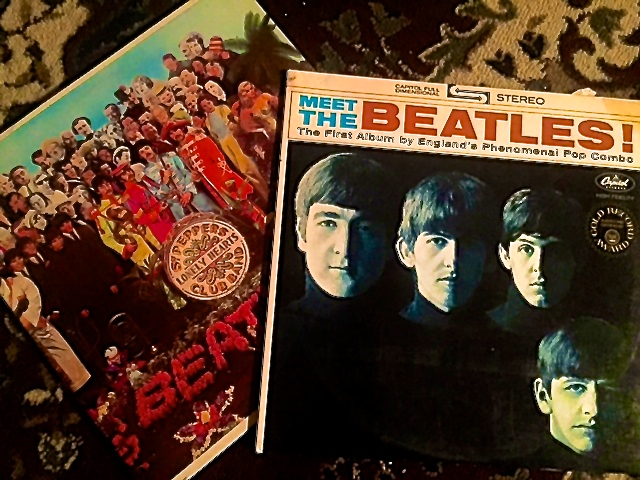
The Ed Sullivan appearance kicked off the group’s first American tour, which rocked through 32 cities in 34 days, and played to sold-out audiences everywhere they went. Everybody knew their names—John, Paul, George and Ringo—and everybody had a favorite.
The shows were what can only be described as pandemonium. Police protection was called in, fainting fans were carried out of auditoriums, concerts were nearly canceled due to mass hysteria and at some shows the screaming was so loud that concertgoers couldn’t hear the band. An institution was born and the four young lads from Liverpool were officially icons.
The Beatles made two stops in Ohio during their first visit to America—the first at Cincinnati Gardens on Aug. 27, where the show was almost canceled because of angry musicians’ union members. The group wanted local songsmiths to share the stage with the British supergroup, but phone calls and general uproar from irate fans forced them to withdraw the request.
The Beatles arrived in town, then chatted with Elvis Presley on the phone and smoked cigarettes before holding a press conference. Soon after, they took to the stage in front of 14,000 frantic fans, playing their latest hits “A Hard Day’s Night,” “Twist & Shout” and “She Loves You.” The cost of a standing-room-only ticket to the Beatles’ first performance in Ohio: $2.75.
“That was some serious babysitting money at the time,” says Worthington resident Audrey Glick. As a junior high student in Cincinnati, Glick and a friend got tickets at the last minute and sat toward the back of Cincinnati Gardens. “It was a horrible place for a concert because of the acoustics,” she remembers. “That was where we went roller skating and to hockey games, so they just put a band at one end to make it into a concert hall instead of a hockey rink.”
Glick says that even though she wasn’t a huge fan at the time, she caught Beatles fever after watching them on “The Ed Sullivan Show.”
“There were crowds all over the place,” she says. “The noise was deafening. You couldn’t hear the music unless you cupped your hands over your ears. We got so caught up in it we were screaming but we didn’t know why.”
Glick went home with a sore throat and a new fascination for the English lads; she began putting a transistor radio under her pillow with a vow to go to sleep after hearing the next Beatles song.
Glick attended a Paul McCartney concert last year. She remembers it as a “world-class event” and a whole different experience. “Back in the ’60s, the band would just stand there and play—there was no act,” she says.
But it didn’t matter to the fans; in fact all the Beatles had to do was stand there to send crowds into a frenzy. A couple of weeks later on Sept. 15, the Fab Four arrived in Cleveland for a show at Public Auditorium and were faced with more bedlam. For this show, radio station WHK had been bombarded with ticket requests, so administrators opted to computerize the requests and chose to distribute the 12,000 tickets digitally.
The show was even more chaotic: fans rushed the stage in a frenzy and police leapt into action, interrupting the band during “All My Loving” and threatened to close the place down. The police held the band backstage for 15 minutes, warning fans to stay in their seats or the show would be over. Legendary Plain Dealer music critic Jane Scott described the event as “one of the top cultural events in Cleveland history.”

And the rest was history. Two years later, the Beatles returned to Cleveland on t heir third American tour. Lancaster resident Dave Gossell was 10 years old when he traveled two hours with his parents and sister to see his favorite band at Cleveland Stadium on Aug. 14.
The songs were different this time around—he Beatles played such hits as “Yesterday,” “Paperback Writer” and “I Feel Fine”—but the scene was similar. “Someone jumped onstage and pulled Ringo off of his chair,” Gossell remembers. “Kids were outrunning the cops. The screaming was so intense that you wanted to scream, too.”
Gossell saved his ticket stub from the show an remains a fan years later.
The Beatles legacy, of course, remains and their music is reaching a whole new generation; Glick says her 23-year-old daughter loves the band. And while they may not have had a choreographed stage show with top-notch sound and visual effects, the music radiated through the screams and touched the hearts of millions. As Gossell says, “You’ll never experience something like that again.”
A trip down memory lane—via Abbey Road
The impact of the Beatles’ first American tour on modern music is undeniable, and in honor of the 40th anniversary of the Fab Four’s first U.S. visit, Abbey Road on the River brings Beatle magic back to Ohio Aug. 6 and 8.
Held on the same stage at Public Auditorium where the Beatles performed on their first U.S. tour, the event includes Beatles tribute bands on four stages, art and and photo exhibits, a virtual Abbey Road cross walk for photo ops, a film and art festival and an amateur singing contest.
Event producer Gary Jacob says Beatles tribute bands always draw big crowds, including fans from all over the world. Abbey Road on the River will feature some unique tribute bands from home and abroad, including all-female, reggae, heavy metal and a singer will will attempt to break into the Guinness Book of World Records by playing all 209 Beatles songs in chronological order without stopping. Fans also will have a chance to enter to win tickets to see Paul McCartney in Los Angeles.
Jacob says what sets this event apart from the average festival is that it ‘brings together lots of groups of people and people who attend alone. You suddenly have thousands of friends who are laughing and dancing together.” He adds that the sense of nostalgia is strong, especially since the Beatles came about during a time of turmoil.
“More happened in that first 24 months than you can imagine,” he remembers. “Kennedy was killed in ’63 and the country was in mourning. In a period of less thn ayear, the Beatles had a half-dozen songs out. You didn’t know it at the time, but you were living history.”
Jacob recalls seeing teens on television saying that the Beatles would last forever. “These kids weren’t guessing,” he says. Jacob encourages fans to visit http://www.abbeyroadontheriver.com and email their Beatles stories and concert memories for compilation.
“Beatles fans are everywhere,” he says. “The Beatles are the cultural phenomenon of our time.”
 C-bus Rock City